Standards
A Notion system the RAWMID team of 10+ uses to run content from a signal in the metrics to release. A decision that worked becomes the norm for the next task.
Design department figures. Photo, production and web designers are not included.
- 0.7 revisionsper typical task after norms and checklists, down from 2.4
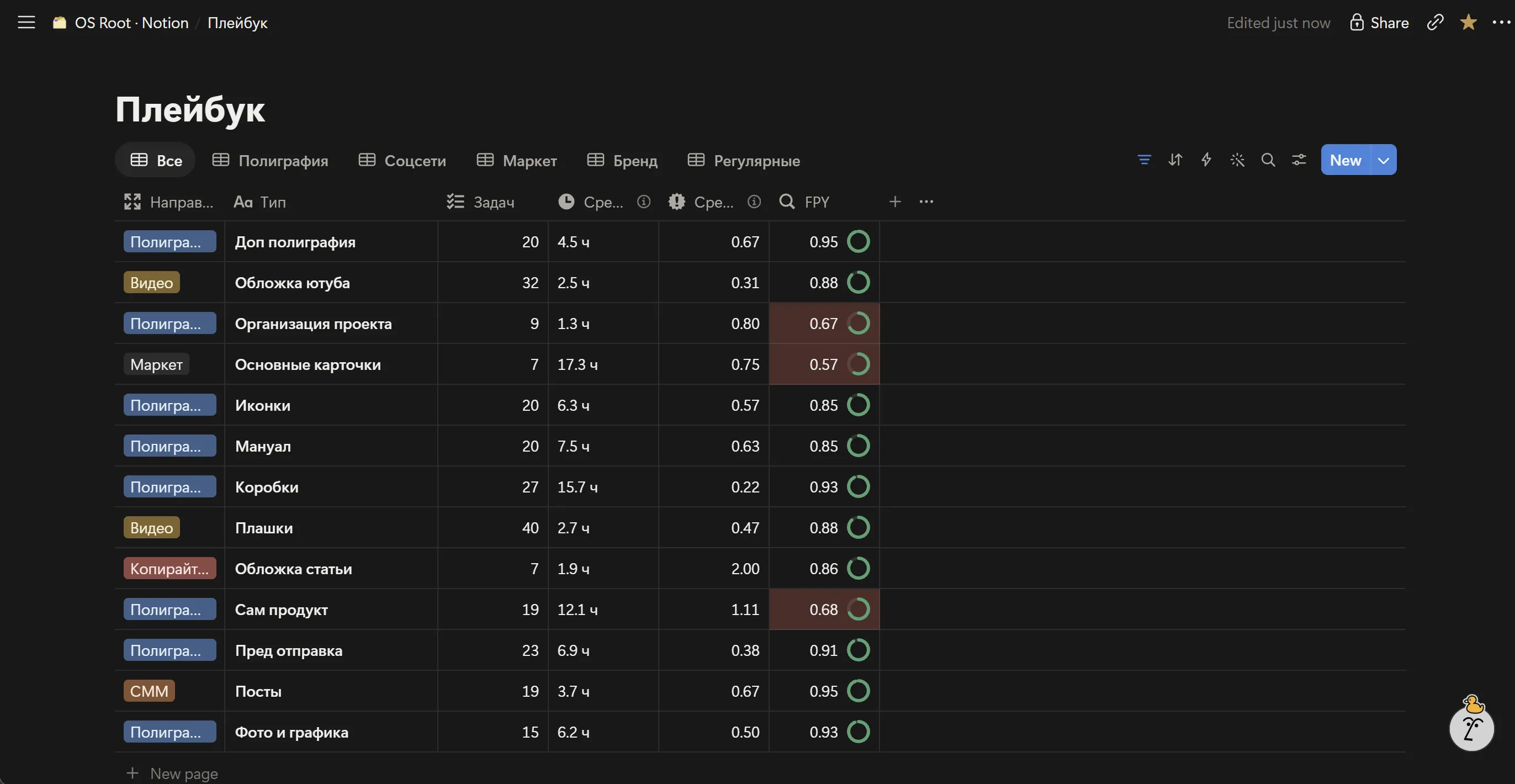
- 1,171 → 33tasks reduced to typical ones, each with its own hour norm
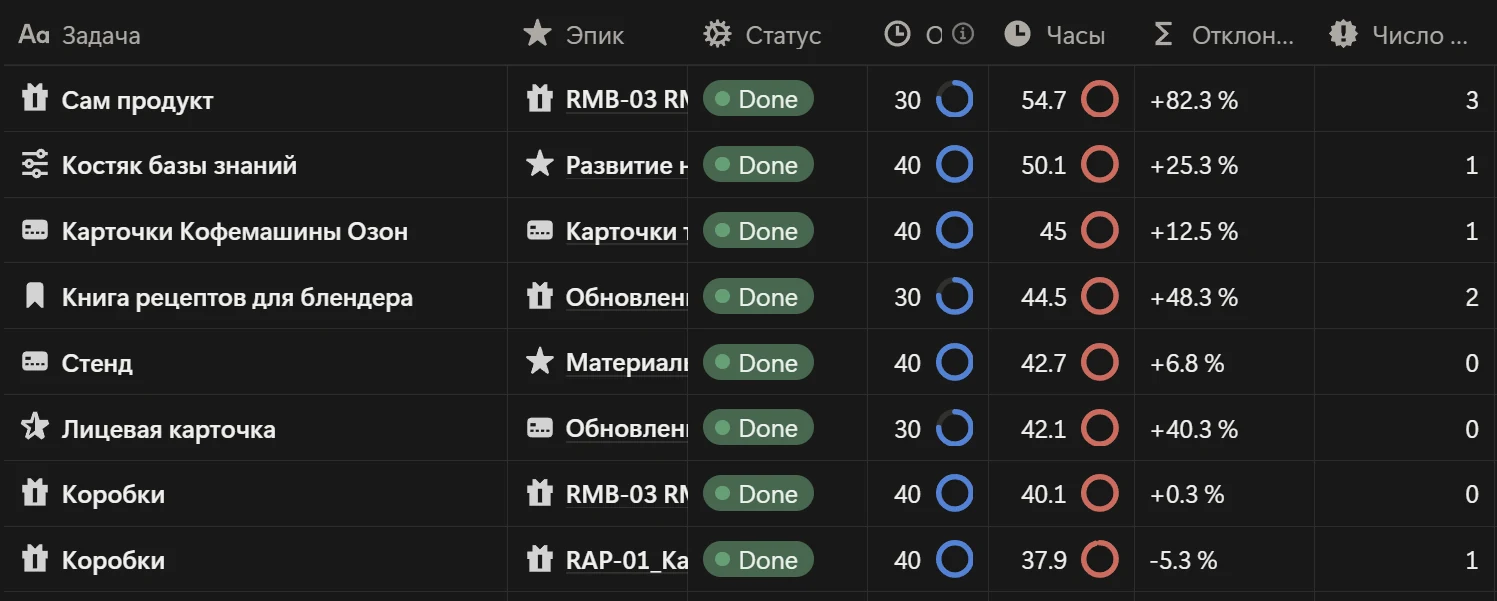
- 1,098 / 1,001 hplanned vs actual across 82 tasks
STANDARDS_/_01
Signal
The system flags tasks where hours or revision rounds went over the norm, formats that lost response, and touchpoints that dropped in the metrics.
STANDARDS_/_02
Research
Under a signal sit the grounds: audience groups, category jobs with expected outcomes, what competitors do. They show where exactly it dropped.
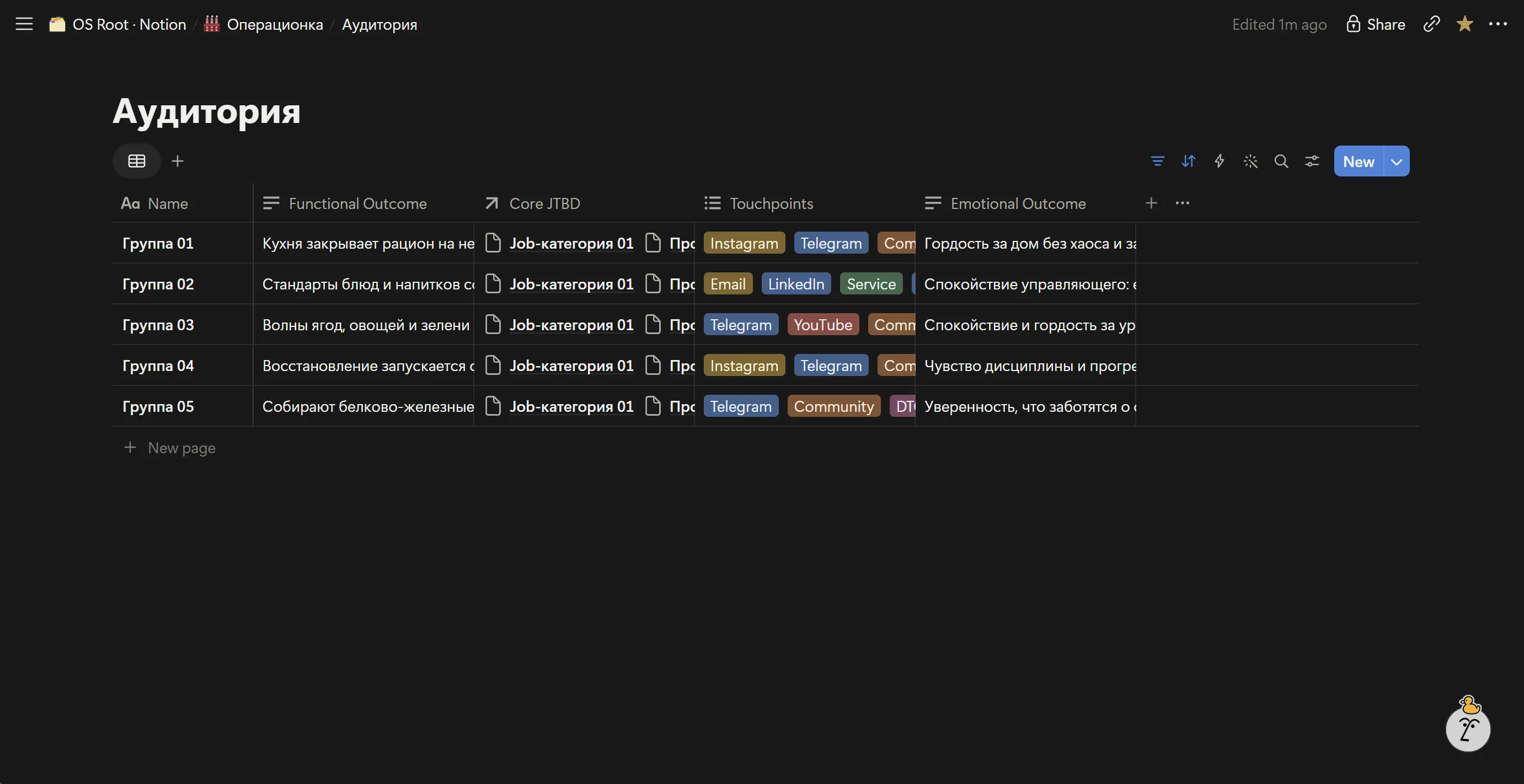
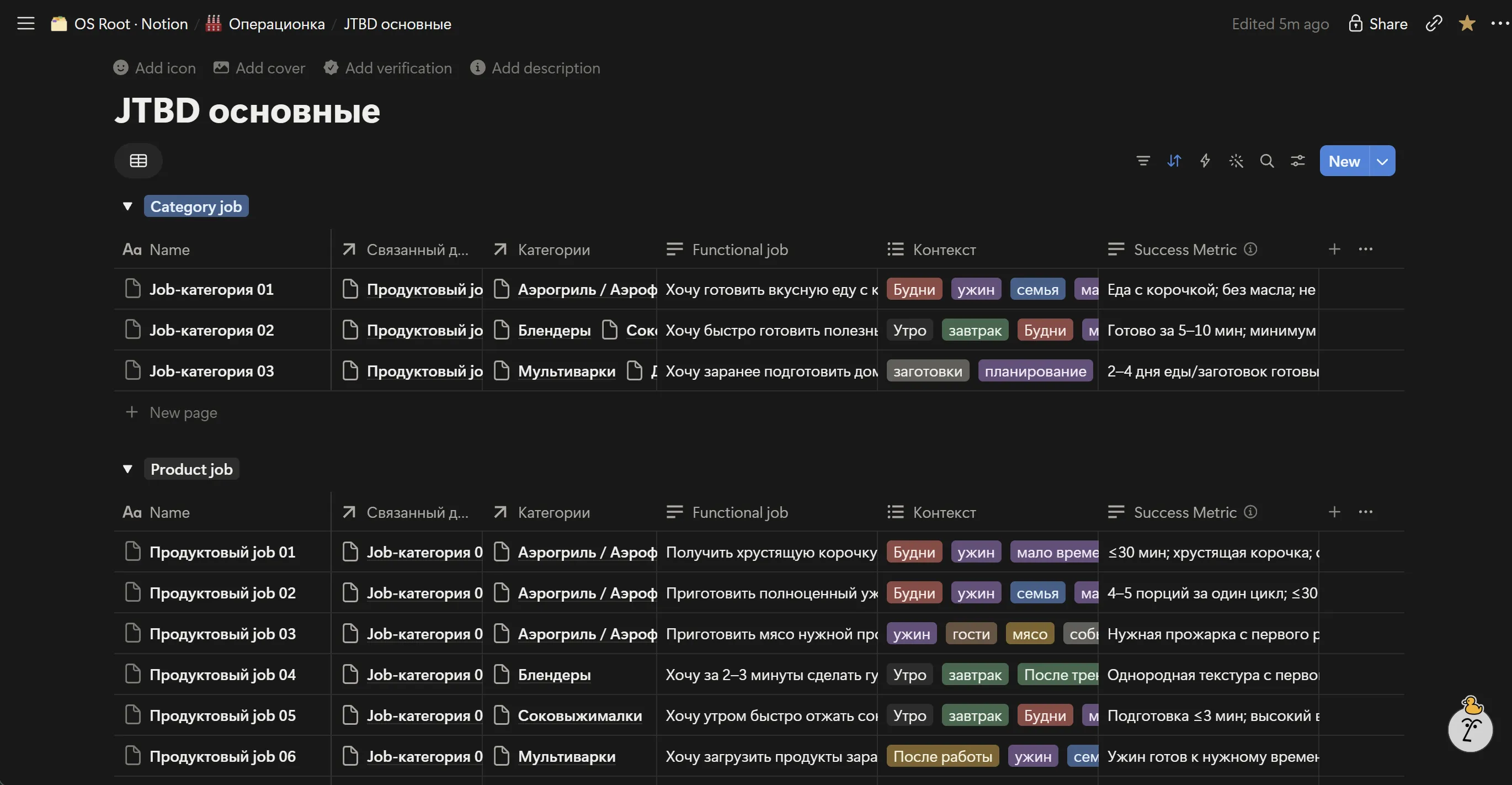
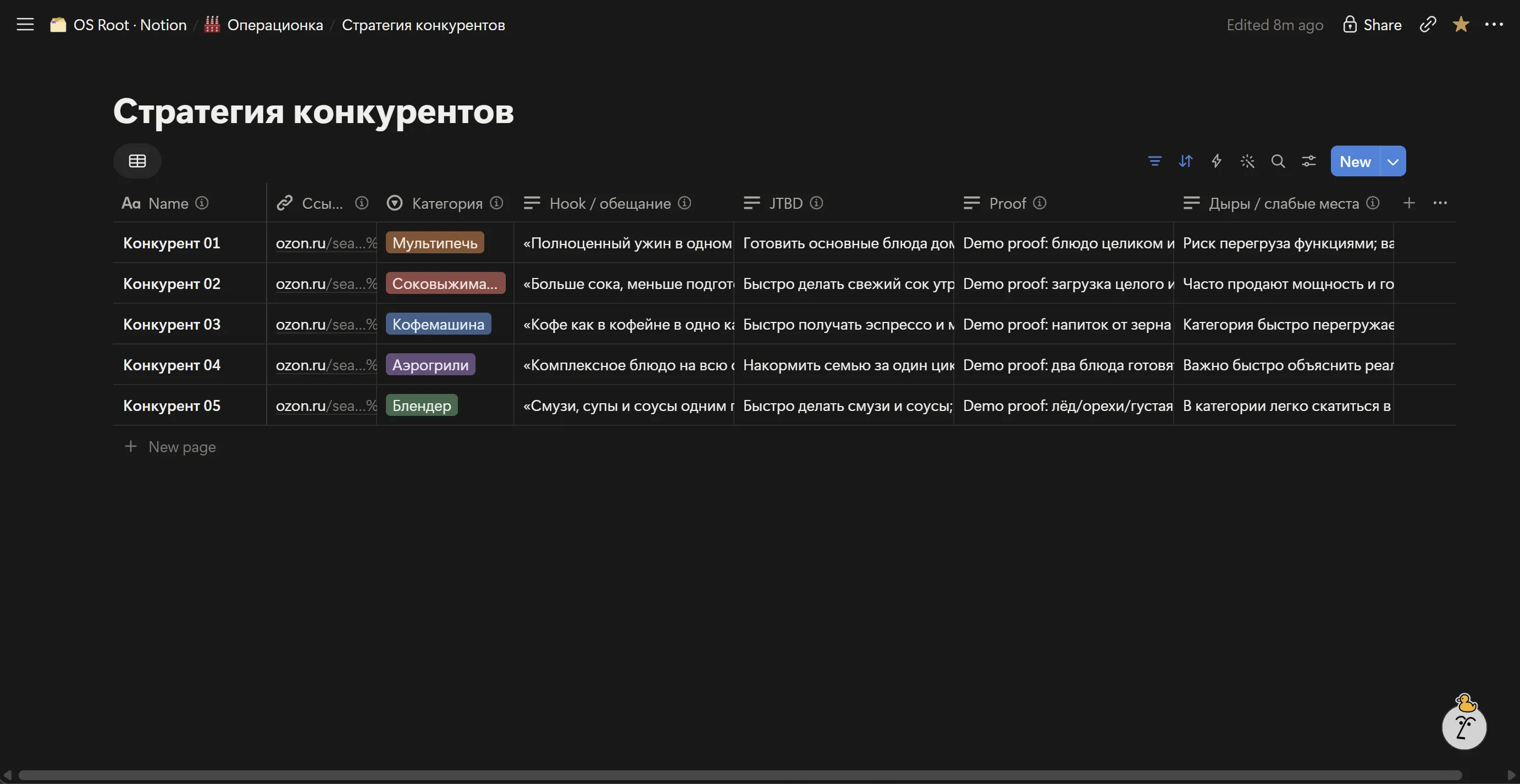
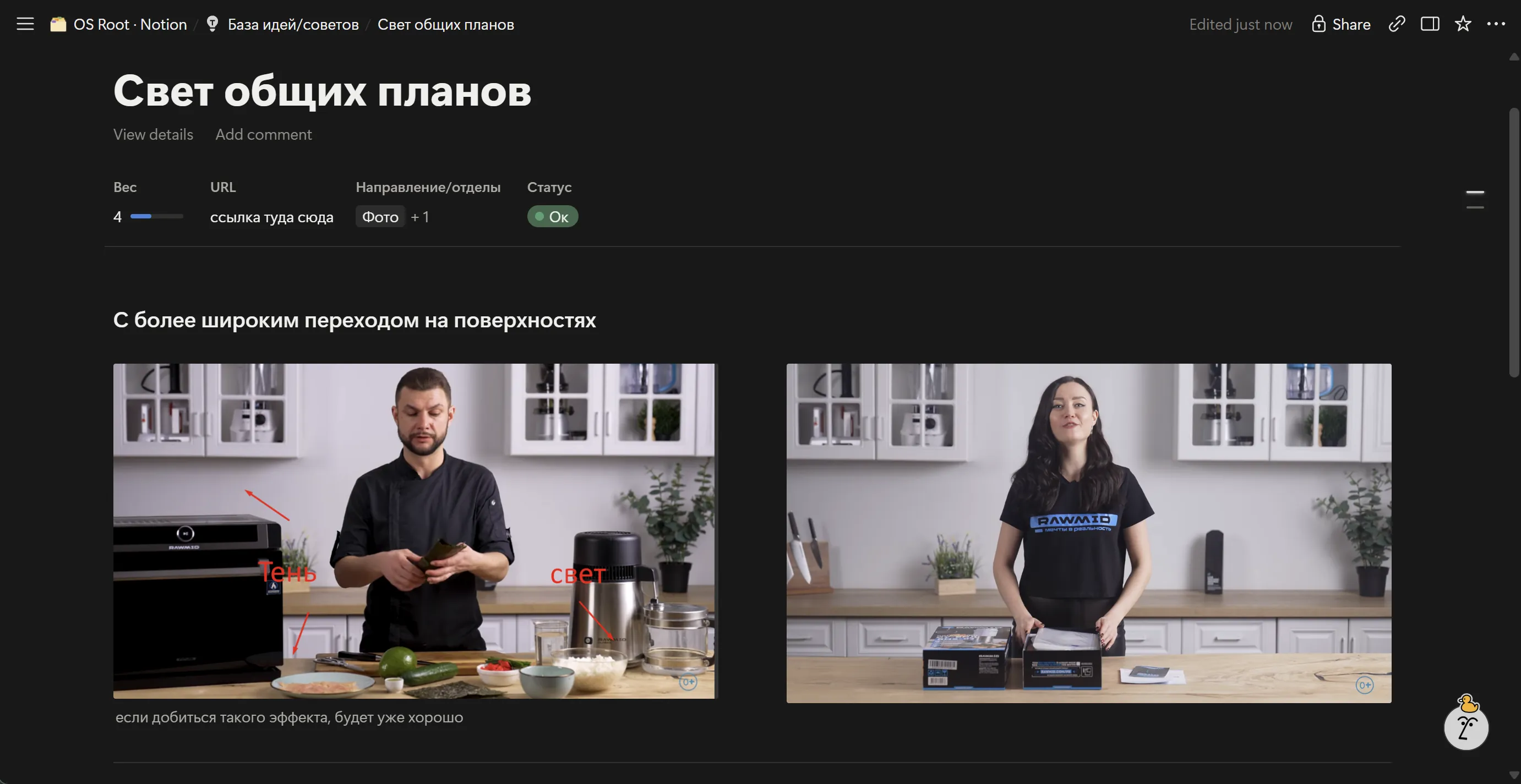
STANDARDS_/_02.1 Audience
STANDARDS_/_03
Hypothesis
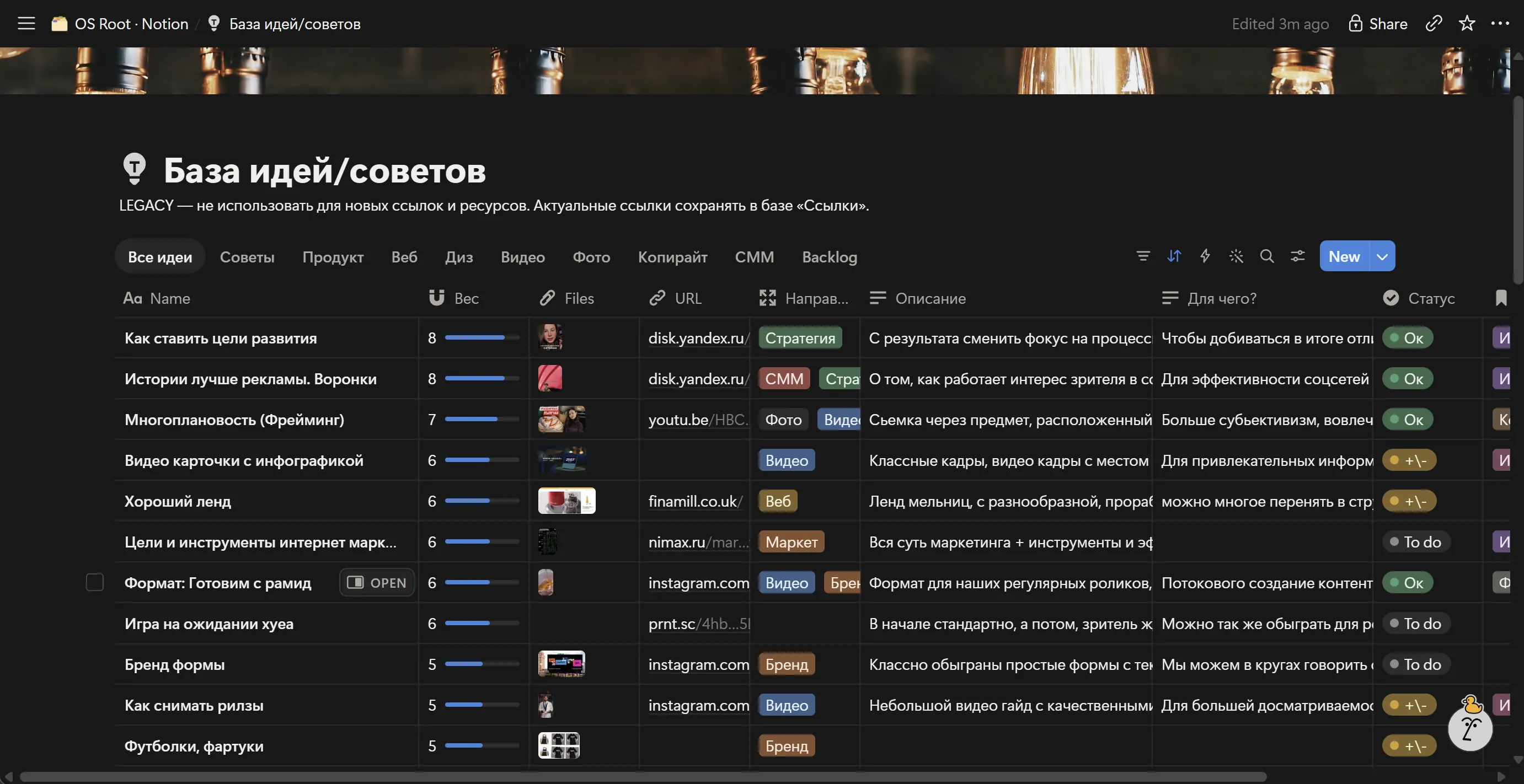
A signal becomes a goal with key results. Hypotheses and concepts are written under it.
STANDARDS_/_04
Production to norms
A concept turns into tasks built on typical ones: owner, deadline, hour norm, plan and actual. Overdue tasks get a red flag.
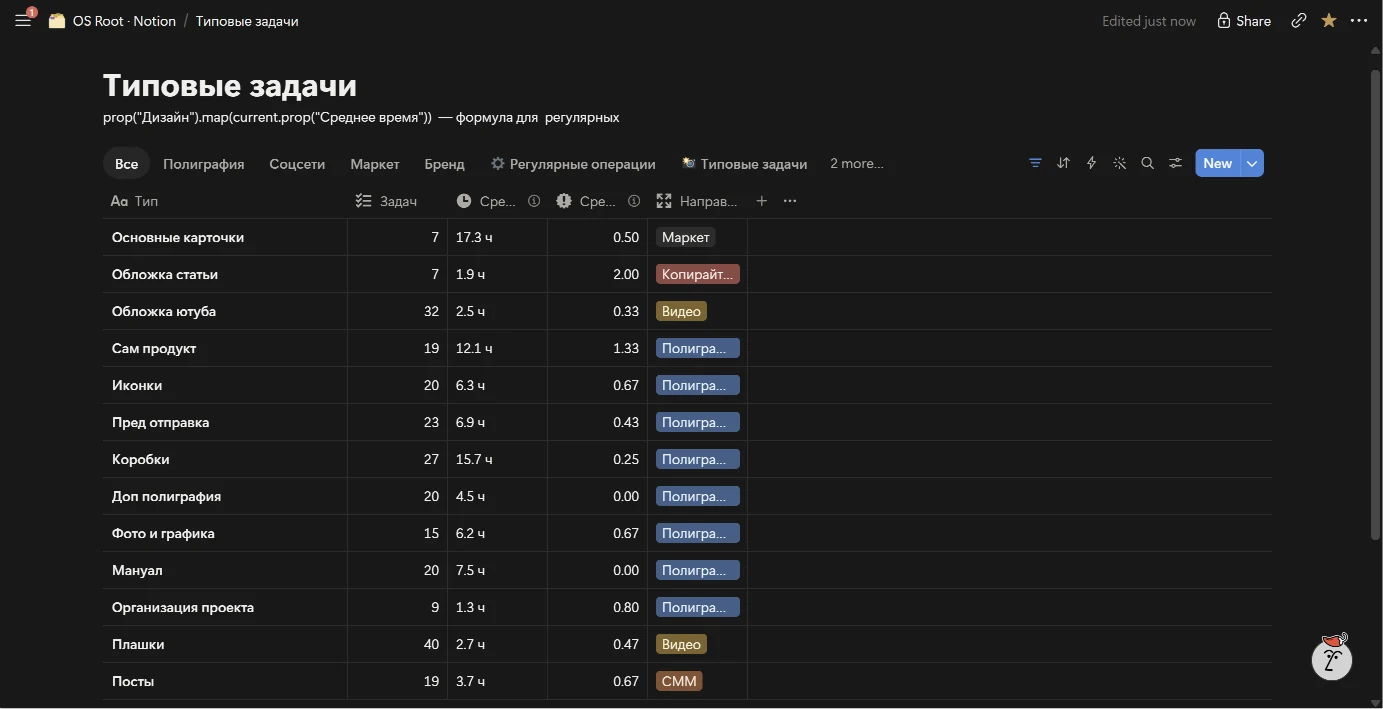
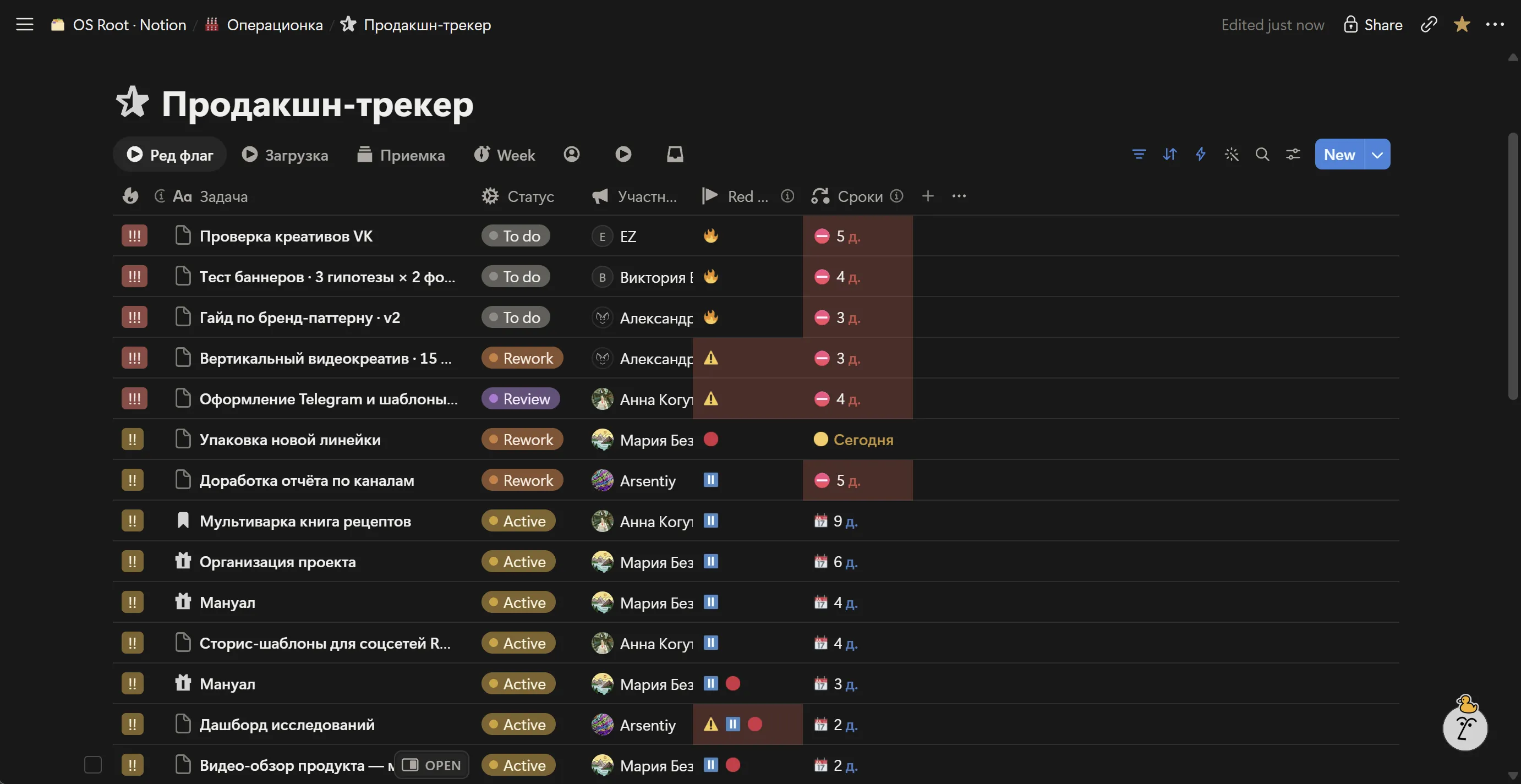
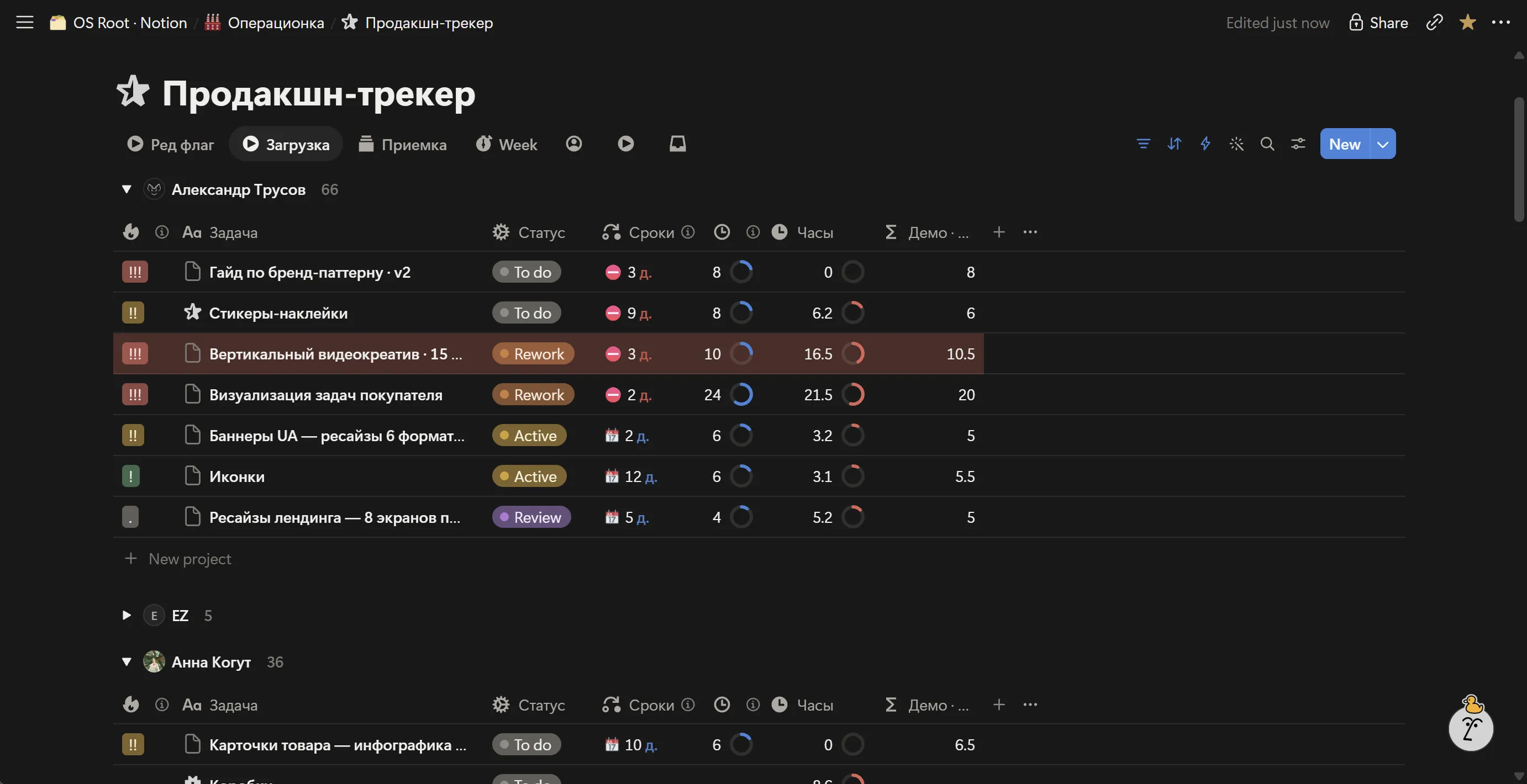
STANDARDS_/_04.1 Standard tasks: average time and revision rounds by type of work.
STANDARDS_/_05
Release
The piece goes out to a channel and lands in the releases base with date and version. Each release links to its material and goal.
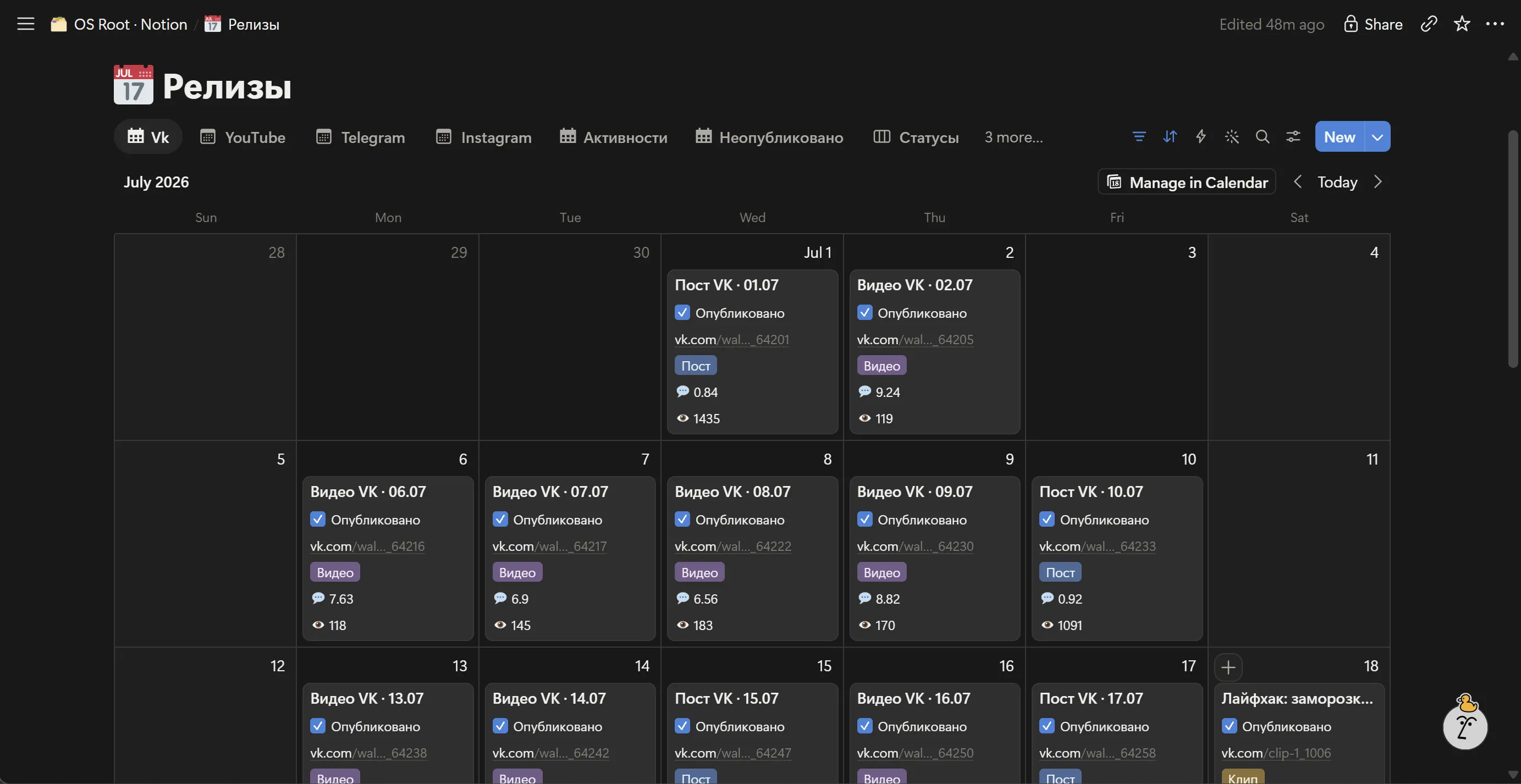
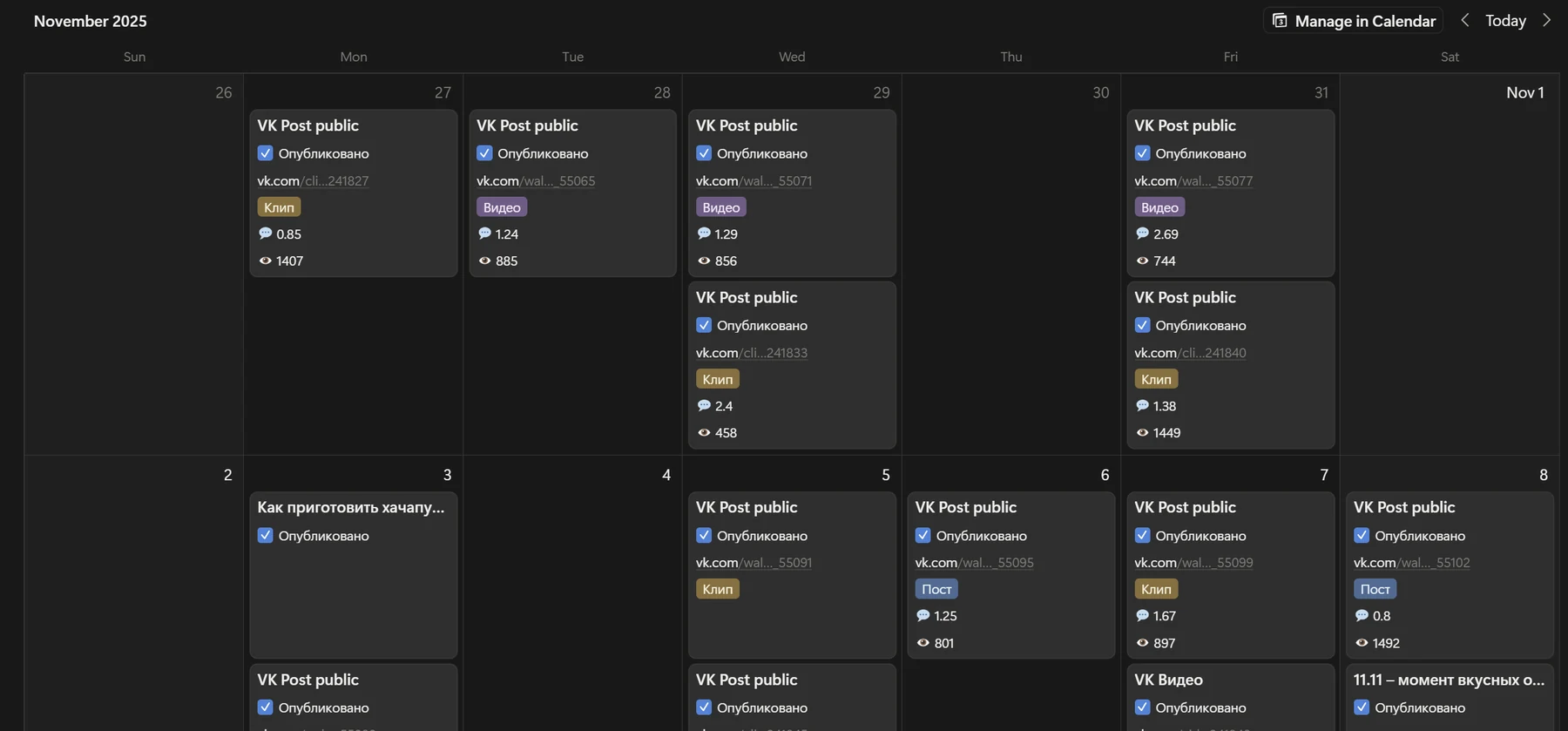
STANDARDS_/_05.1 Release log: post, channel, date, linked asset and collected metrics.
STANDARDS_/_06
Metrics
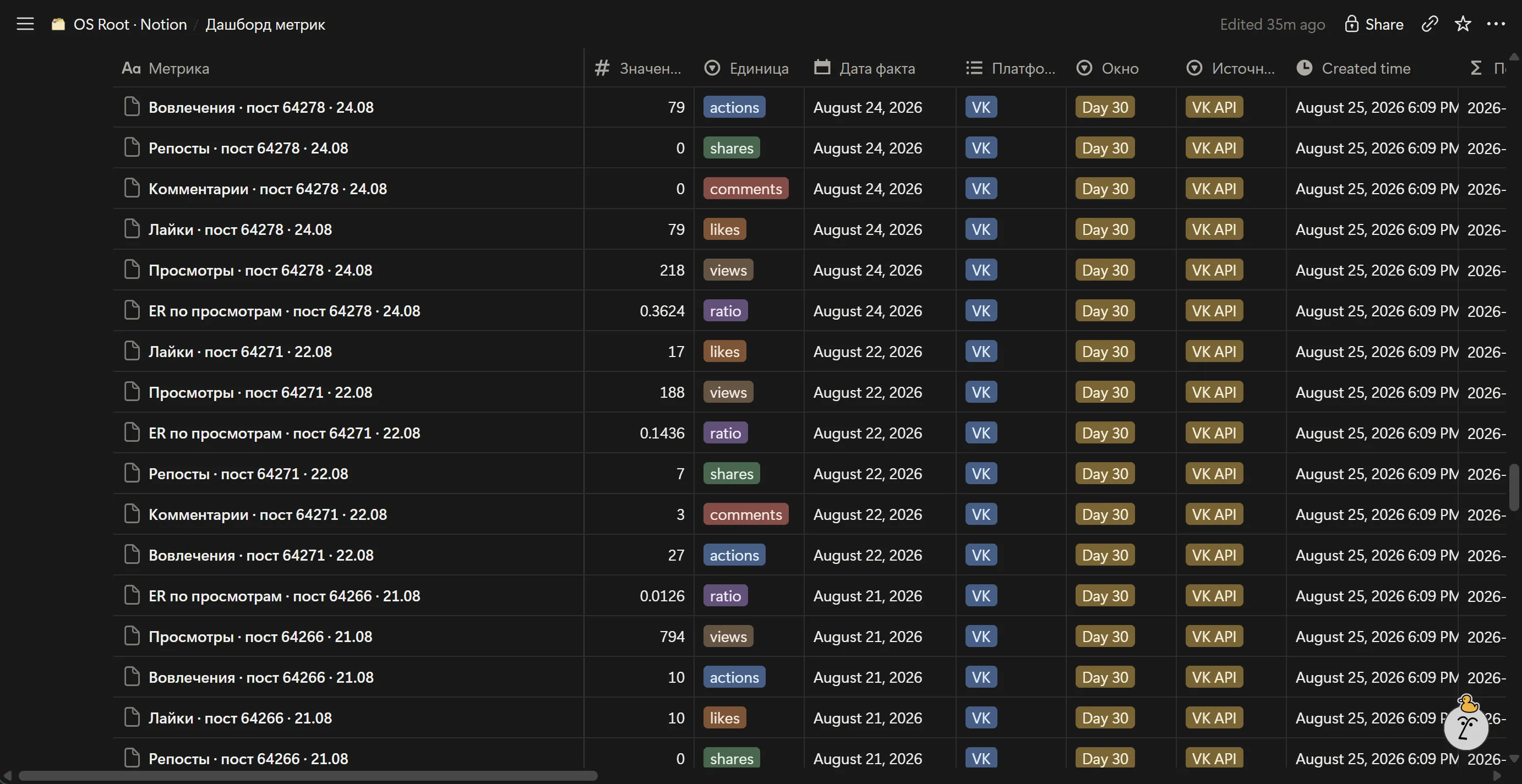
Stats arrive in the facts base with source and period and roll up into the goal’s key results.
STANDARDS_/_07
New norm
What proved itself is fixed in the typical task: steps, rules, good examples and a recalculated hour norm. The next signal is checked against it.